
Bathroom mirrors
Usually sized close to the vanity width, and the mirrors most exposed to steam and splashes, so edge protection and backing are worth asking about.
Watch out for: An ordinary mirror may suffer at the edges in constant humidity.
Mirrors made to size, shape and location
A good mirror starts with the wall: its width, its height, the light beside it and the room it lives in. Here is how to settle size, shape, edge and fixing before you send an inquiry.
The short answer
A custom mirror means you settle the width, height, shape, edge and mounting location before ordering, instead of picking a ready-made size. This page covers bathroom, dressing-room and decorative wall mirrors, and explains shapes, edges, fixing and moisture. Each option and its availability is confirmed on inquiry after your measurements and photos are reviewed, and the page quotes no fixed prices.
Start with the room: it drives moisture, lighting and fixing more than the shape does.
Usually sized close to the vanity width, and the mirrors most exposed to steam and splashes, so edge protection and backing are worth asking about.
Watch out for: An ordinary mirror may suffer at the edges in constant humidity.
One panel or several in an entrance, hallway or living room, reflecting light and making the space feel wider.
Watch out for: Fixing depends on the wall type and the weight of the panel.
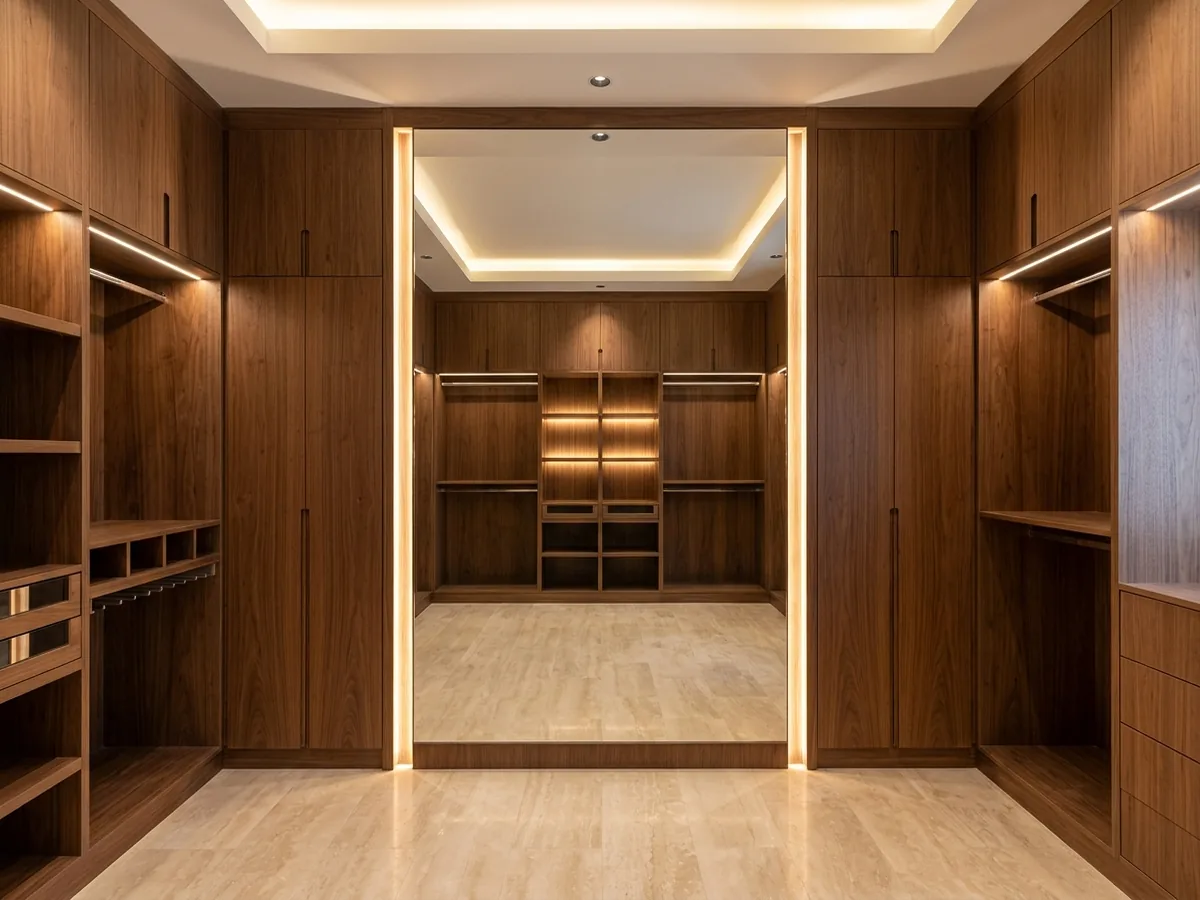
A full-height mirror, or two panels side by side, next to wardrobes or behind a door, to see the full outfit.
Watch out for: Tall panels need considered fixing, not simply leaning on the wall.
Geometric panelling, bevelled edges or special shapes that work as a design feature on the wall.
Watch out for: The more complex the layout, the more precise the measuring must be.
Mirrors with built-in lighting, common in bathrooms and vanities, with electrical and moisture considerations covered on the LED mirrors page.
When a ready-made size does not suit the wall, cabinet or basin, width and height are set to the exact place.
Shape changes how a room feels, but feasibility differs from shape to shape, so each one is confirmed on inquiry.
The simplest to measure and fit; suits vanities, walls and tall mirrors. Slightly rounded corners soften the look and are an option to ask about.
Softens the hard lines of a room and suits entrances, hallways and single basins. Decide the diameter and centre height early.
Adds soft height, suitable for entrances and bedrooms. The length-to-width ratio is part of the design and is best shown with a reference photo or sketch.
Arches, organic forms or cut-outs that follow the wall. Made where feasible, with feasibility confirmed for each request after the sketch and size are reviewed.
Watch out for: Complex shapes can raise cost and limit edge options.
Tell us the room, width, height and shape you have in mind with a photo of the wall, and feasibility and options are reviewed before any quote.
The edge is the first thing the eye reads after the reflection, and it shifts a mirror between plain and rich.
| Aspect | Polished edge | Bevelled edge (where available) |
|---|---|---|
| Look | Straight, smooth edge with a clean line | A narrow angled frame around the mirror |
| Effect on light | Calm; does not draw attention to the edge | Breaks light at the border and adds a bright detail |
| Suits | Bathrooms, contemporary schemes and multi-mirror homes | Entrances, decorative walls and geometric layouts |
| What to ask | Confirm the option and how it protects the edge in humidity | Availability by shape and thickness; it may not suit every size |
Choose Polished edge
Choose polished for a plain, consistent look across several mirrors in the home.
Choose Bevelled edge (where available)
Choose bevelled when the mirror is a feature piece that should show at its border.
In damp places the edge is the first weak point; ask how it is sealed and how the mirror is fitted so it never sits in standing water.
Start with the vanity width. A common design idea is a mirror equal to the vanity or slightly narrower so the wall looks composed, and wide enough for two people at a double vanity. It is general design guidance, not an engineering rule, so measure your wall and compare more than one width first.
A bathroom is humid and fills with warm steam, and its lighting decides what you actually see. Ask how well the product tolerates moisture, and think about where light falls so it lights your face rather than your back. If you want lighting built into the mirror, the electrical details are on the LED mirrors page, not here.
For mounting height, place the centre of the mirror near the eye level of most users and check everyone in the household. Keep the lower edge a sensible distance from basin and tap splashes. These are design ideas to try on the wall before ordering, not fixed numbers.
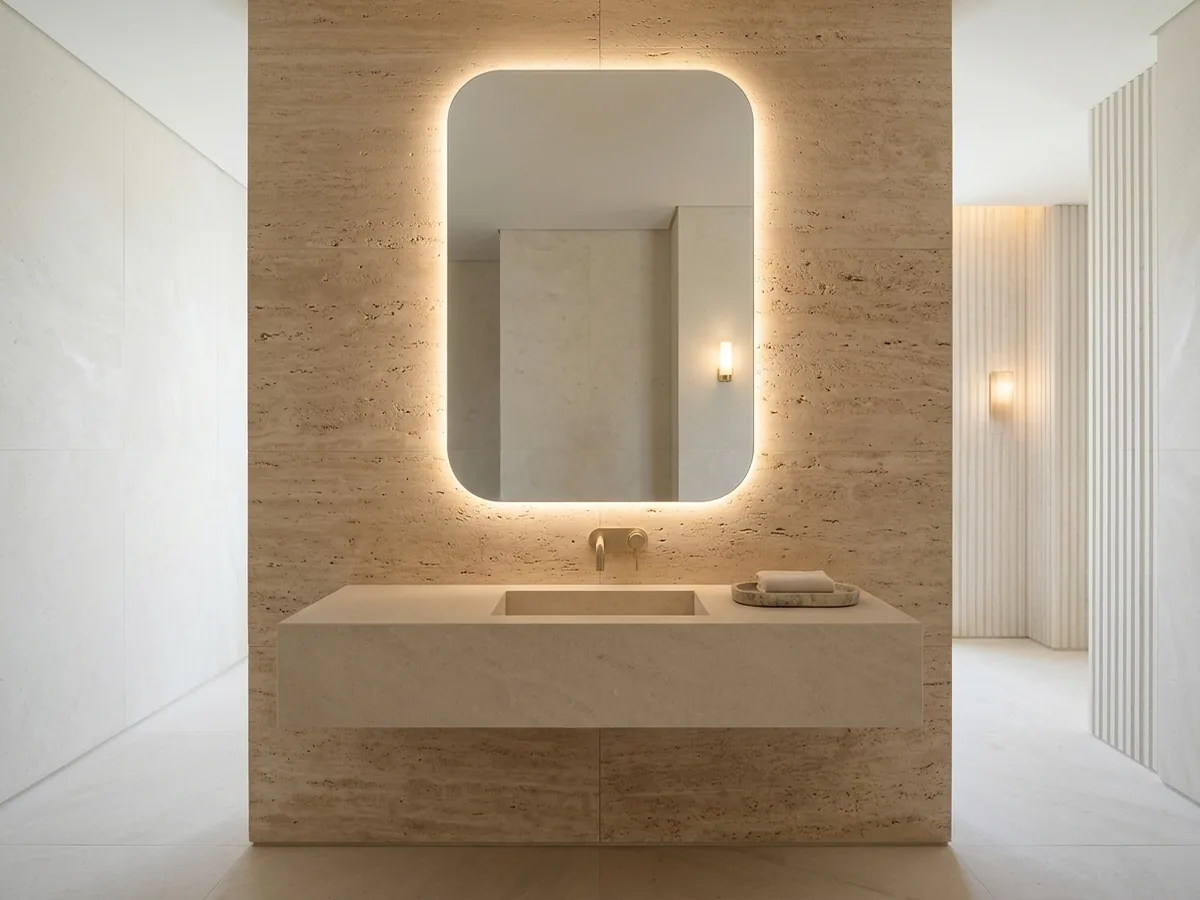
Mirrors do not all tolerate moisture alike; an ordinary mirror and one made for damp rooms are different products.
A tall mirror first needs a suitable wall. Before ordering, check how flat the wall is, what it is made of and what sits behind it, and decide whether it goes between wardrobes, behind a door or on a free wall. The taller and heavier the mirror, the more the fixing method matters, and it is reviewed per size and location.
A large mirror merely leaning on the wall without fixing is not presented as a suitable solution, and stability is never assumed just because a tall mirror stands. Ask about wall fixing, floor level, and protecting the bottom edge from knocks and cleaning tools.
Consider reflections: a mirror facing a window or door doubles light and movement and can change the feel of the room. If vertical lighting beside the mirror, as in the concept image, is part of your idea, it belongs to lit mirrors and is confirmed separately.
A decorative mirror becomes part of the interior design. The concept image shows a bevelled mirror wall with geometric panelling behind a console, as an example of the idea and not a completed project. Decide whether you want one panel or a layout, and whether the joins should show or disappear.
Coordinate the mirror with its surroundings: wall colour, furniture lines, light source and what will be reflected. A panel facing a blank wall reads differently from one facing a picture or a window. Edge and frame choices follow the style, with availability confirmed.
Check the wall before choosing a large layout: is it flat, can it carry the weight, will the panels need to align? Multiple panels demand finer measuring and careful alignment, so send a photo of the whole wall.

These are general questions reviewed for each request; there is no single answer for every home.
Tile, marble, plasterboard or concrete each take fixings differently. Send a photo and ask what suits.
The larger the panel, the heavier and harder to move. Also check doorways, lifts and stairs, since a large panel may not pass.
Adhesive, screws, brackets or a frame. Chosen by wall, weight and location, and the suitable one is confirmed on inquiry.
Avoid a mirror that throws direct sun or an awkward view back into the room. Try the position with tape first.
In bathrooms and kitchens, ask about the edge, the backing and how it is sealed on fitting.
Ask whether a safety backing or film is possible for the size and location, especially with children or large panels. Confirmed on inquiry.
This is the preliminary information needed to review a request. The final size is confirmed after the wall is checked.
Width
Measure across the area you want covered, left to right, and note the smallest reading if the wall is not true.
Height
From the lowest point you want to the highest, noting ceiling, cabinets and taps.
Shape
Rectangular, round, oval or a custom shape, with a sketch or reference photo.
Mounting location
The room, wall type and the height you want above floor or basin.
Lighting
Do you want a mirror with or without lighting? If lit, note where the power source is.
Photo
A photo of the whole wall and a close shot of the location, with a tape measure in frame if possible.
No fixed prices are published because size, shape and finish differ between requests. A quote follows once your project details are reviewed.
Share the sizes, the shape and a wall photo over WhatsApp. Each option is checked for availability first, and only then does a quote follow.
Note width, height, shape and room, and photograph the wall.
State whether you want a polished or bevelled edge and whether lighting is wanted.
Shape, edge, availability and wall suitability are reviewed, with follow-up questions if needed.
It sets out size, specification and installation for you to review before deciding.
Verification of size and fitting are coordinated after you decide, as agreed.
Questions about this service
Round and oval shapes are options you can inquire about. Feasibility of the diameter or ratio and the suitable edge is confirmed per request after your size and photo are reviewed, and not every size and shape is assumed to be available.
The edges of ordinary mirrors can be affected over time by repeated humidity and steam, leaving dark marks near the border. That is why bathrooms call for asking about a product made for damp rooms and how the edge is sealed, with what is available confirmed on inquiry.
A bevelled edge is discussed by shape, thickness and size, and may not suit every design or complex shape. It is confirmed on inquiry, and a polished edge is the clean alternative if it is not available.
There is no figure that fits every case. The maximum depends on the product available, handling and transport, building access and the fixing method, and is confirmed per request after the site details are reviewed.
This page deals with ordering a new mirror to the sizes you set, and does not promise to cut a mirror or glass supplied by the customer. If you have an existing mirror to replace, send its size and a photo so the case can be reviewed.
Not always, but the bathroom is the dampest room, so it is wise to ask about a product suited to damp areas and how the edge is sealed. The need varies with the mirror distance from basin and shower, and with ventilation.
Yes, fixing is treated as part of a tall mirror rather than an optional extra. The method depends on wall type, weight and location, and it is worth asking about it, and about child safety, before you commit.
It depends on the product. Built-in lighting is usually decided at order time because it ties into installation and electrics. If lighting is likely, mention it from the start and see the LED mirrors page for its detailed questions.
Four short steps prepare a clear WhatsApp message. Sizes are approximate, for inquiry only; final sizes are confirmed after technical verification.
LED Mirrors
LED bathroom mirrors: lighting types, moisture, electrical compatibility, qualified installation and pricing factors, with no unconfirmed features assumed.
Shower Glass
Compare sliding, hinged, fixed, corner, walk-in and frameless shower enclosures, plus sizing, hardware and pricing factors, before you request a quote in Taif.
Glass Doors
Hinged and sliding glass doors for homes and interior spaces: systems, hardware, glass options, the measurements to prepare, and pricing factors.
LED Mirror Guide
Practical buying guide for custom backlit LED mirrors covering bathroom moisture protection, lighting tone, mounting, and concealed wiring prep.
Taif
Custom tempered glass, shower enclosures, doors, mirrors, storefronts and partitions in Taif. Choose your service and location and prepare your inquiry.